A used camera can be good value when the buyer checks the exact body, lens, battery and seller's remedy before paying. A listing's image count or “excellent condition” label is only a starting point. Ask for a hands-on inspection or a written return window long enough to test the functions you need.
What should the buyer test?
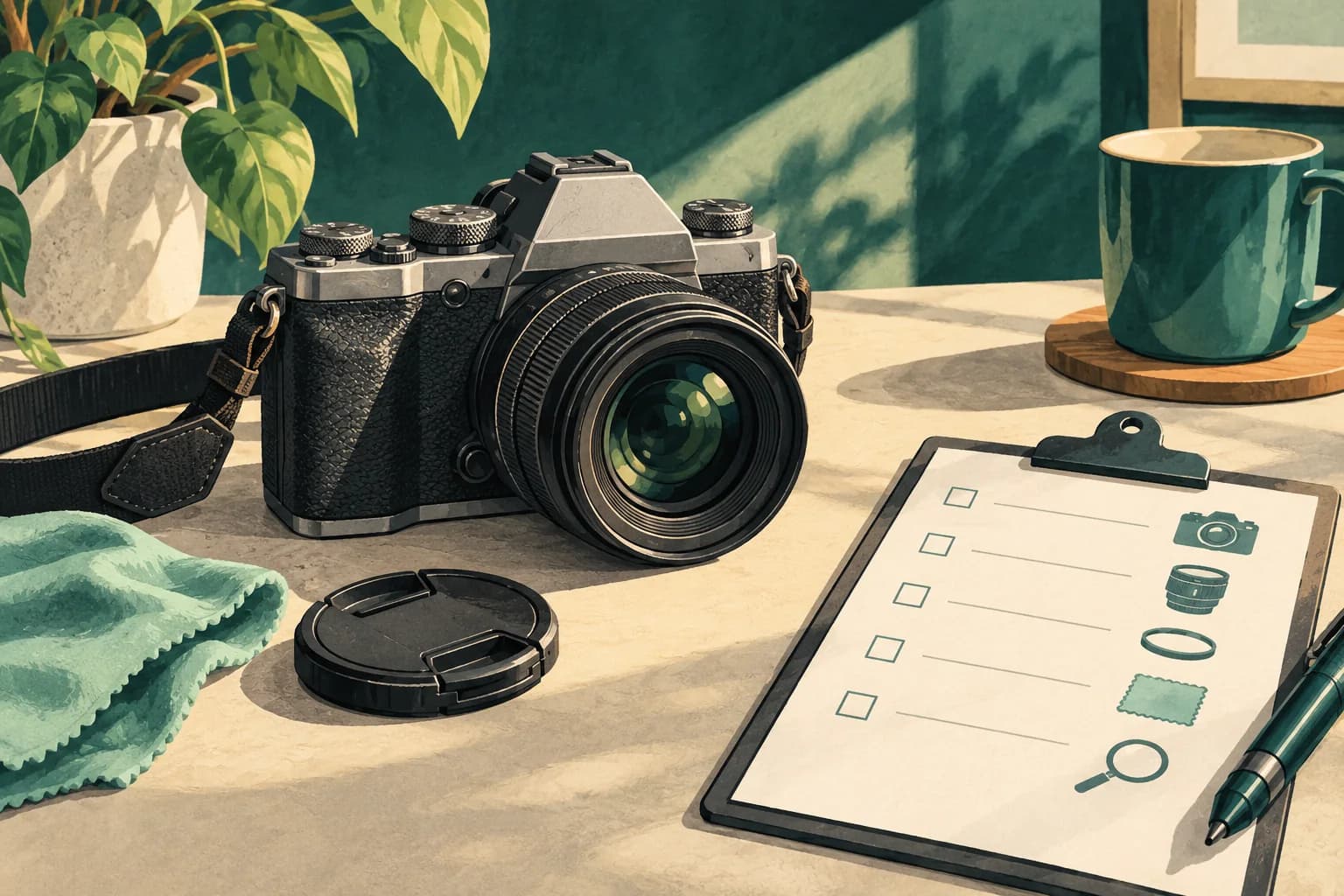
For an illustrative used mirrorless camera, bring a compatible memory card and take photos in good and low light. Check body damage, buttons, screen, viewfinder, focus, charging port, battery door and lens mount. This model is fictional; use the maker's manual for the real one. Ask about included lens, charger, caps, strap and battery condition. Test a lens at multiple focal lengths if it zooms, and inspect images rather than only the rear screen. Do not claim to have tested a named seller's camera based on its photographs.
Ask the seller for the exact model and serial number on a receipt and any remaining manufacturer warranty proof. A private sale, shop sale and marketplace sale can have different terms. CASE's consumer information is a starting point for a consumer dispute, while its Lemon Law overview explains possible remedies for eligible defective goods. The transaction facts and applicable law matter; a private transaction should not be treated as having the same seller obligations as a retail sale without checking.
How should two offers be compared?
Write down body condition, shutter or use information where the maker makes it available, included lens, battery, accessories, warranty, return route and total cost. A fictional Seller A may offer a cheaper body with one worn battery and no test period; Shop B may cost more and include a short written return route. Add a replacement battery and travel to the total before deciding. CCCS's quality-claims guide helps question “like new” or “fully tested” claims. Ask what was actually inspected and when.
Our used-phone guide has a similar counter-test and receipt method; the refurbished-laptop guide shows how to ask about grading and battery condition. If the camera will be used for paid event work, the home-insurance guide helps frame a separate question about cover, though an actual policy must be checked for business use. Do not let a future paid job justify a hurried purchase without testing.
What happens after the sale?
Save test photos, receipt, serial number and written promises. Charge and test again within the return period, including the lens and ports not used at the counter. If an issue appears, report it promptly through the agreed channel with evidence. Avoid changing firmware or opening the camera before understanding the seller's return terms. You can send TBYB a used-camera checklist question for editorial guidance. We do not sell or inspect used cameras.
If a lens is included, ask whether its hood, caps and filter are part of the sale and test that the camera recognises it. A working camera body with a damaged lens may still require significant extra spending. Test an ordinary video clip too if video use matters. Note whether autofocus noise or overheating appears during the duration you would actually record. Do not rely on a single clean sample photo supplied by the seller; use your own settings and card where permitted. If remote buying is unavoidable, obtain a useful return window in writing.
Common questions
Does “excellent condition” prove the camera functions?
Ask for specific test evidence and conduct your own checks where possible.
Are private and shop sale remedies identical?
Do not assume so; check the transaction, written terms and applicable law.
Is a low body price the full cost?
Add lens, battery, charger, storage and any repair or return risk.
Sources
- consumer information case.org.sg
- Lemon Law overview case.org.sg
- quality-claims guide ccs.gov.sg
Something changed or worth adding?
Send a correction or suggestion