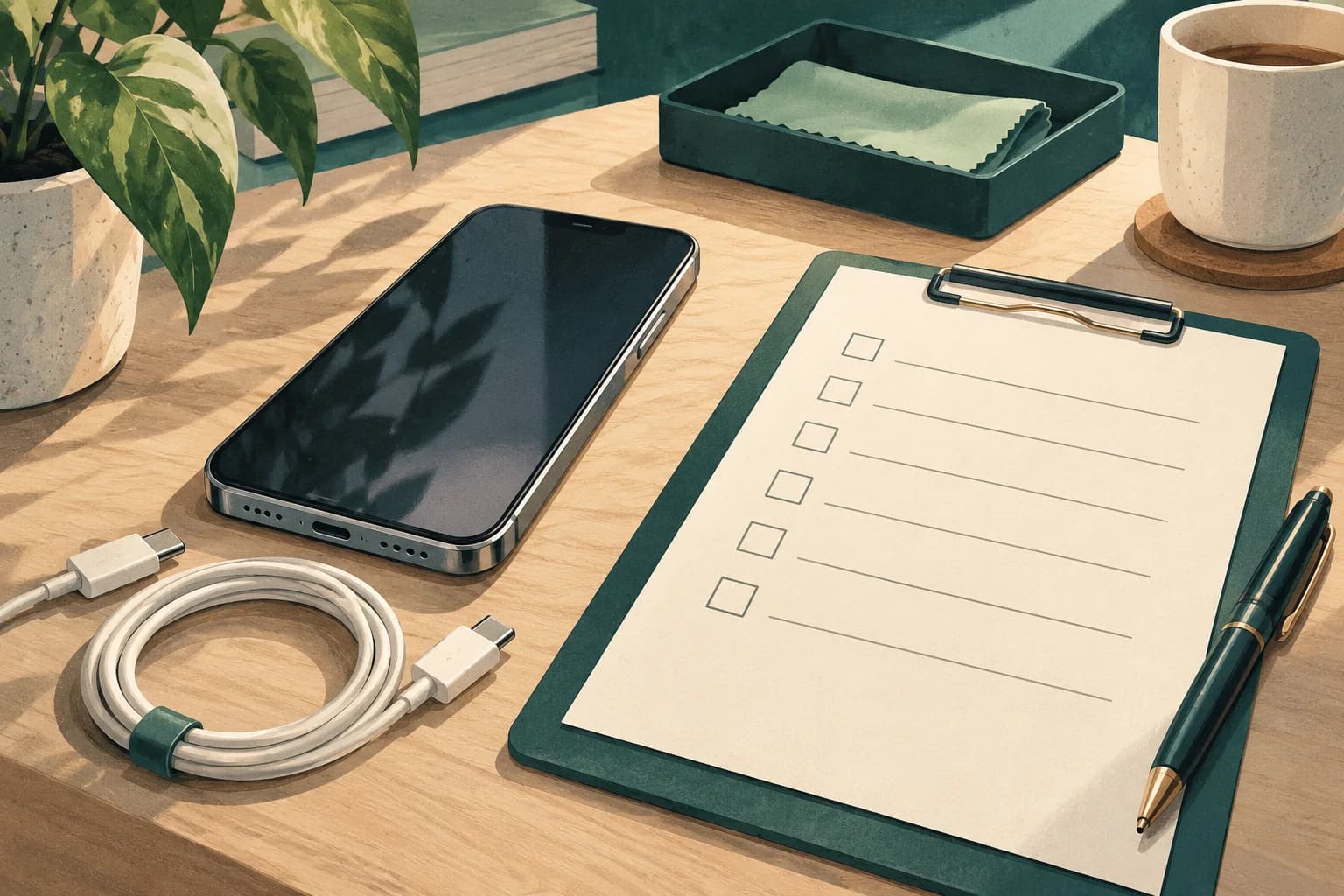
Before buying a second-hand phone in Singapore, test the exact handset and get the seller's return and warranty terms in writing. A clean photograph, a claimed battery percentage or a low asking price cannot tell you whether the device is locked, whether its ports work or whether the seller will help if a fault appears tomorrow. This counter checklist is designed for a shop or a safe arranged inspection, not a claim that TBYB has tested a product.
What should you ask before meeting a seller?
Request the model and storage size, an honest description of repairs and damage, the included accessories, and the seller's written price and return terms. Ask whether the handset has been reset and can be activated under a new account. Do not send your own account credentials or verification codes to “reserve” a phone. A very low price is a reason to inspect more carefully, not proof of a scam or a bargain. If a seller will not allow a functional test before final payment, you cannot use this checklist and should decide whether that uncertainty is acceptable.
IMDA's equipment-registration framework is a source for questions about telecom equipment offered locally. It does not certify a particular used handset or prove that one device is genuine. Check the actual model details and seller documents. The CCCS price-transparency guidance is relevant when comparing an advertised price with the total payable, including compulsory fees; the individual transaction still needs its own written terms.
How can you test one handset in ten minutes?
Bring your own charging cable, a compatible SIM if appropriate and a short checklist. First compare the model and storage shown in settings with the written listing. Inspect the display at several brightness levels, the edges, camera lenses, buttons, charging port and signs of water or impact damage. Connect to Wi-Fi, make a call if permitted, test speaker and microphone, take a front and rear photo, and plug in the charger. Check that the device restarts and can be reset without an old owner's account blocking activation. Do this in the seller's presence; do not log into personal accounts until you decide to keep it.
The test is a screen for obvious problems, not a laboratory battery or waterproofing assessment. Ask how the seller measured battery health and whether a replacement battery or display is original, third-party or unknown. Record any fault in the receipt before payment. If you cannot assess a claim, mark it “unverified” rather than accepting a seller's verbal promise. Compare two phones using the same tests and a repair-risk allowance, not just the displayed price.
What belongs on the receipt?
Write the model, storage, serial or other identifier when appropriate, price paid, listed condition, included accessories, disclosed repairs, warranty duration, what is covered, the claim route and the return deadline. Ask who pays shipping or diagnostic charges if a problem appears. A generic phrase such as “shop warranty” leaves important questions unanswered. CASE's consumer recourse information is a starting point if a dispute arises, while a buyer should preserve the listing, messages, receipt and test notes. This guide does not determine the legal outcome of a particular dispute.
For an illustrative comparison, Phone A is S$400 with a documented battery replacement and a seven-day written return window; Phone B is S$360 with no repair history or written return terms. The figures and terms are fictional. The S$40 difference does not by itself decide which is better: test each phone, read the written policy and consider the cost of an unresolved fault. A trustworthy seller should make those details easy to inspect.
The product-demo guide helps you plan a test, the second-hand electronics handover guide covers the broader device category, and trying guides collect other pre-purchase checks. You may send TBYB a question about a seller's terms as an editorial enquiry. We do not sell or certify phones or promise a retailer introduction.
Common questions
Does a ten-minute inspection prove a used phone will last?
No. It can reveal obvious problems with the display, controls, charging and connectivity, but cannot predict hidden faults or battery life.
Is a seller's “shop warranty” enough information?
Ask for the duration, coverage, exclusions and claim process in writing before paying. The label alone does not explain what happens if the phone fails.
Are the S$400 and S$360 offers real Singapore listings?
No. They are fictional examples used to show how a small price difference can hide different levels of risk.
Sources
- equipment-registration framework imda.gov.sg
- CCCS price-transparency guidance ccs.gov.sg
- consumer recourse information case.org.sg
Something changed or worth adding?
Send a correction or suggestion