A robot vacuum should be compared against a real floor plan and the work its owner still has to do. The device may clean open areas well but struggle with thresholds, loose cables or furniture it cannot reach. Before buying, map the rooms, obstacles and maintenance chores, then ask sellers for evidence and return terms.
Which part of the home is the test?
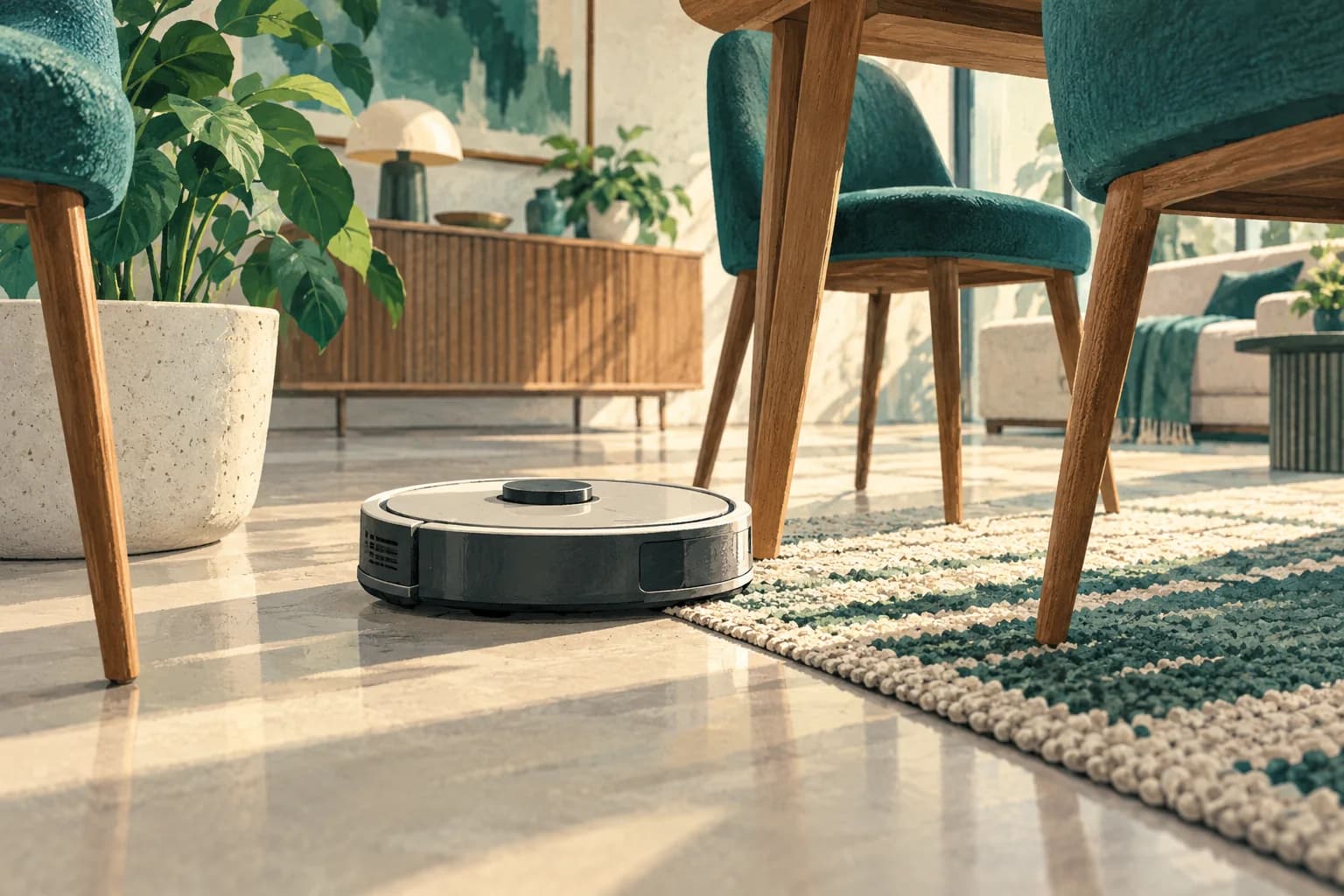
For an illustrative flat with a low threshold into the kitchen, two rugs and dining chairs close together, mark where a robot can travel and where manual cleaning remains. This flat is fictional. Measure the highest threshold and clearance under furniture. Ask the seller for the model's written dimensions and supported threshold height, then test the specific return policy if it fails in your home. Do not assume a showroom demonstration on a smooth floor predicts performance on rugs. Our sofa-test guide uses a similar room-measurement approach for furniture; the home-router guide shows how to test a device against a real layout.
Ask how the model handles charging, map errors, stairs, dark flooring, pet hair, cords and wet cleaning if offered. If an app or camera is involved, read what information it collects, where maps are stored and how accounts are deleted at resale. PDPC's data-protection obligations are an official reference for organisations handling personal data; a household should still examine the manufacturer's actual privacy terms. A feature called “smart mapping” does not by itself explain data use.
What is the ownership cost?
Ask for the total price including dock, bags, filters, brushes, cleaning liquid if applicable, delivery and subscriptions. Request the schedule and price for replaceable parts. A fictional Model A may cost less upfront but need expensive proprietary bags; Model B may cost more and have lower routine part cost. Calculate a two-year scenario with the same assumed usage, clearly marking uncertain consumable prices. CCCS's price-transparency guidance helps check conditions behind promotions and the final payable total. Its quality-claims guide is useful when a seller makes broad claims about “complete cleaning”. Ask what the claim actually means and how it was tested.
What should be tested after purchase?
Run the machine through the hardest everyday area during the return window. Note rooms missed, stuck points, noise, bin capacity and how long it takes to clean or maintain the device. Keep the packaging and proof of purchase under the seller's written policy. A robot is an additional cleaning tool, not a promise that no human cleaning is needed. Our home-cleaning quote guide helps compare an alternative service if cleaning time is the main problem. You can send TBYB a robot-vacuum comparison question for editorial guidance; we do not test or sell devices.
Ask the seller how long consumables and replacement batteries are expected to remain available for the exact model, and where the machine can be serviced. A device that works well in week one may become expensive if a small part cannot be replaced. Record the model number and part prices before comparing the initial discounts.
Keep a photo of the room arrangement used for the test, so you can repeat it if the device behaves differently later.
Common questions
Does a high suction number prove good cleaning in my home?
Check model tests, layout fit and a usable return trial, not one advertised specification.
Are maps always stored only on the robot?
Read the model's current app and privacy terms; do not assume the storage arrangement.
Is the purchase price the full cost?
Add consumables, subscriptions, delivery and likely replacement parts.
Sources
- data-protection obligations pdpc.gov.sg
- price-transparency guidance ccs.gov.sg
- quality-claims guide ccs.gov.sg
Something changed or worth adding?
Send a correction or suggestion