
If you want to donate clothes in Singapore, the most useful thing to know is where they end up. The Environment Minister told Parliament on 9 September 2026 that most textiles collected here are resold or reused in overseas markets, given the lack of local capacity to process textile waste. So clothes in good condition do the most good when they go to someone who will wear them, through a charity shop, a resale counter or a swap; badly worn items have far fewer outlets, and none of them is the blue recycling bin.
This guide sorts a year-end wardrobe clear-out into the routes the National Environment Agency (NEA) lists, explains what happens to each pile, and gives a short check to run before you drop anything off.
What did the Government say about textile recycling?
In a written reply on 9 September 2026, Minister Grace Fu said recycling textile waste is hard because of the varied materials and fibre blends used. Most collected textiles are resold or reused overseas, and the Government's efforts focus on reducing textile waste and maximising reuse first. It has supported organisations such as GreenSquare and The Fashion Pulpit to encourage repair, reuse, swapping and responsible donation, and will keep assessing whether Singapore needs its own textile recycling capacity.
An earlier reply, on 5 November 2025, said the current focus for producer responsibility schemes is e-waste and beverage containers, and that used textiles, which are not readily recyclable, are collected through channels such as in-store collection points for resale or reuse.
In practice, that means there is no national take-back scheme for clothes of the kind that now exists for cans and bottles. What happens to a T-shirt depends on the channel you choose.
Which pile does each item go in?
NEA's donation, resale and repair channels page, last updated on 20 August 2026, sorts clothing and shoes by condition:
- In good condition: donate or resell through the channels NEA lists.
- Needing repair or alteration: use a repair or alteration service from NEA's list, then wear, sell or donate.
- Damaged beyond repair: dispose of as general waste.
NEA says some people put old clothing, shoes and bags in the blue recycling bins, which are meant for recyclables, and gov.sg's reduce, reuse, recycle explainer says these items do not belong in the blue bins or chutes. Two collectors on NEA's list take items in poorer condition: it describes H&M's garment collecting programme as accepting clothes or textiles of any brand and in any condition, with rewearable items sold second-hand and the rest shredded and recycled into new clothes, insulation or cleaning materials, and Cloop as collecting clothes and other textiles in any dry condition with its partner Life Line Clothing.
Where can I donate, sell or swap clothes?
NEA's list, which it says is non-exhaustive and may change, includes these routes for clothing:
- Sell for cash or credit: Cash Converters and Refash, plus the Cash-for-Trash stations run by public waste collectors, where residents exchange recyclables for cash.
- Donate to charity shops and social services: the Salvation Army's Re:Nue Family Stores, the Red Cross Shop, MINDS, Metta Welfare Association, SSVP and South Central Community.
- Donate to collectors: Cloop, which works with Life Line Clothing to sort items in Malaysia; GreenSquare, which offers free doorstep textile collection and sells what it collects to second-hand textile importers in developing countries; and Kloth Circularity's fabric bins.
- Swap: Swapaholic runs clothing and accessory swaps.
- Specific needs: ItsRainingRaincoats accepts men's apparel in pristine condition for its free store for migrant workers, and Dress for Success was marked as currently closed for clothing donations.
Each organisation sets its own rules on condition, quantity and drop-off times, and we could not open their websites from our desk, so check before you go.
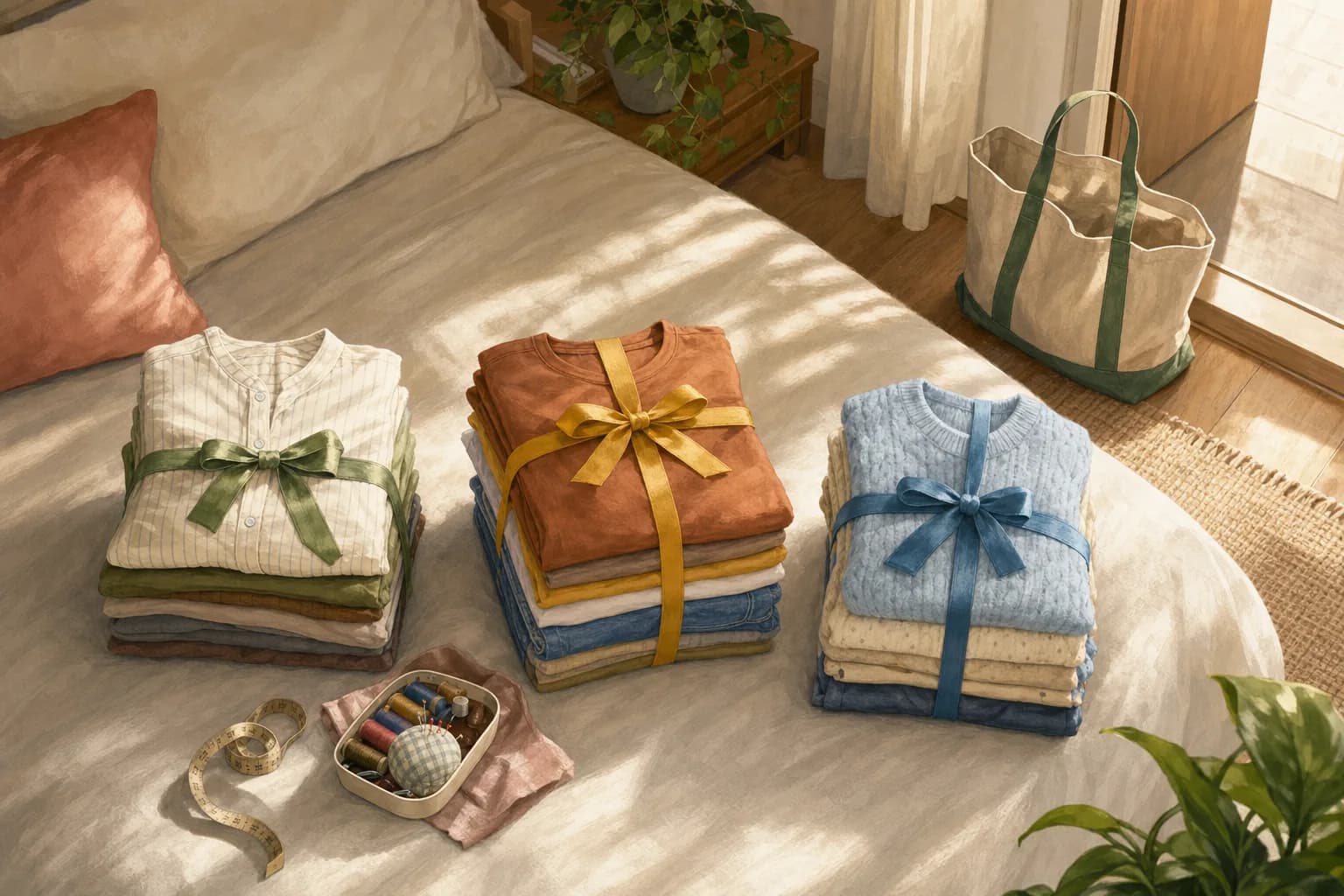
A 30-item clear-out: an illustrative example
A fictional household in Toa Payoh clears 30 items before the year-end festive season:
- 12 wearable pieces in good condition, including two work blazers. The blazers go to a resale counter for credit; the rest go to a local charity shop, which in our view gives them the best chance of being worn again here.
- 5 items with a loose hem or broken zip go for alteration first. Three come back wearable and join the charity pile; two are not worth the repair cost.
- 3 children's items in good condition go to a community organisation that channels pre-loved items to families.
- 8 worn-out T-shirts and socks go to a collector that accepts items in any condition, rather than the blue bin.
- 2 items too damaged for anything go in general waste, as NEA advises.
The point of the order is value: the further down the list, the less likely an item is to be worn again, and the minister's reply says most collected textiles are resold or reused overseas.
What should I check before I drop off clothes?
Our suggested checks, to save a wasted trip and a donation nobody can use:
- Is the channel accepting right now? At least one listed organisation was closed to clothing donations when NEA's page was last updated.
- What condition does it take? Charity shops want items they can sell; some collectors accept items "in any dry condition"; only a few take damaged clothing.
- Wash and dry everything, and pair shoes.
- Ask what happens to items it cannot use. Given the minister's reply, many will be exported for resale; if you would rather an item stays in Singapore, sell or donate it locally.
- Keep the receipt or credit slip if you resell, so you can follow up.
Buying less to begin with is the step the Government puts first: its reduce, reuse, recycle explainer lists the three in order of priority. Our guide to a home trial and return window helps you test clothes and furniture before the return period ends, and our e-waste recycling guide covers the electronics that often surface in the same clear-out. See the ownership topic for more.
Common questions
Can I put old clothes in the blue recycling bin?
No. NEA says blue bins are meant for recyclables; donate or resell clothes in good condition, and dispose of items damaged beyond repair as general waste.
Where do donated clothes in Singapore end up?
The Environment Minister said on 9 September 2026 that most textiles collected are resold or reused in overseas markets, given the lack of local capacity to process textile waste.
Where can I donate worn-out clothes?
NEA lists H&M's garment collecting programme as accepting clothes of any brand in any condition, and Cloop as collecting items in any dry condition; otherwise, items damaged beyond repair go in general waste.
Is there a government textile recycling scheme?
Not in the replies we read. The current focus for producer responsibility schemes is e-waste and beverage containers, and the minister said in September 2026 that the Government will keep assessing the need for domestic textile recycling capacity.
Sources
- written reply on 9 September 2026 mse.gov.sg
- earlier reply, on 5 November 2025 mse.gov.sg
- donation, resale and repair channels page nea.gov.sg
- reduce, reuse, recycle explainer gov.sg
Something changed or worth adding?
Send a correction or suggestion
